
When curiosity sends the wrong message
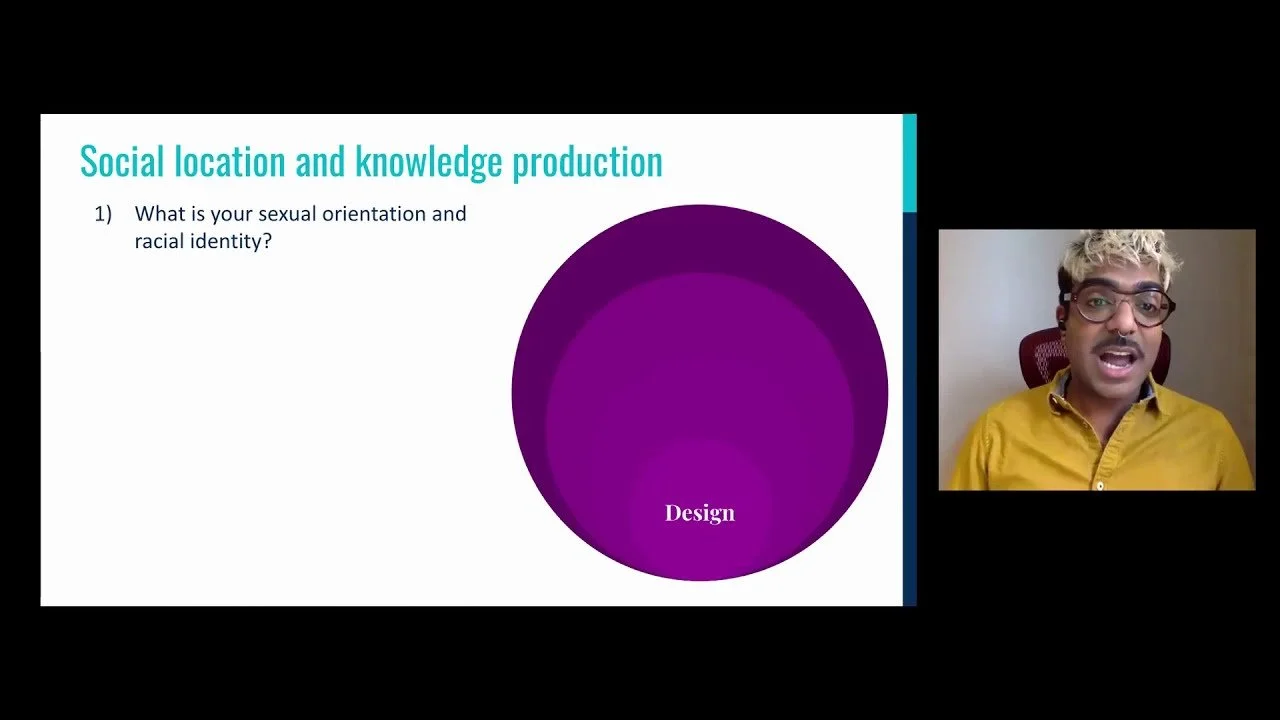
Keynote · Canadian Sex Research Forum · October 2020 · 50 min
Speaking as a psychotherapist and social worker, Rahim guides sex researchers and educators through a reflexive process, similar to clinical supervision, across the stages of knowledge production: design, recruitment, data collection and dissemination. Why do we want a racially diverse sample in the first place? That is one of many questions the talk asks us to consider about our own social location.
The second half speaks directly to sex and relationship therapists. It opens with questions that encourage clinician reflexivity, then works through a case scenario that surfaces common ableist and neurotypical biases. The talk argues that curiosity without self-reflexivity can lead to flawed research, microaggressions in therapy and the continued marginalization of LGBTQIA+ communities.
What it covers
- Implicit bias
- Reflexivity in research and therapy
- Ableism and neurotypical assumptions
- Anti-oppressive practice
Related on this site
Archived record: doi.org/10.5281/zenodo.19167513